
By Shayne Lopeman, Marketing Manager•April 24, 2026
Artificial intelligence is rapidly changing the way people access information, but when it comes to legal advice, it’s important to understand its limits. AI tools can generate fast, confident responses to legal questions, which can make them appear authoritative. However, they do not “understand” the law. Instead, they predict patterns based on existing data. This means they can produce answers which may sound correct, but they could be incomplete, outdated, or entirely wrong. Courts, such as the NSW Supreme Court , expect legal professionals and self-represented litigants to take certain precautions, and at times make certain declarations, with respect to generative AI for documents that come before the court. Both legal professionals and self-represented litigants have been negatively impacted by their use of generative AI in matters before the court. AI doesn’t apply legal reasoning Unlike a qualified lawyer, AI does interpret legislation or apply legal principles to a specific set of facts. It does not weigh competing authorities, assess credibility, or consider how courts have applied the law in practice. Legal advice requires: Understanding current legislation and case law; Applying that law to your unique circumstances; and Exercising professional forensic judgment. AI simply cannot replicate this process. The risk of incorrect or outdated information AI-generated responses may: Misinterpret statutes or legal terminology; Rely on outdated laws or cases; and Overlook key exceptions or nuances. The result is advice that may appear reliable, but could expose you to significant legal risk if acted upon. Privacy and confidentiality concerns When you input information into an AI tool, you may unknowingly disclose sensitive or confidential details. This can include: Personal information; Financial details; and Sensitive communications. Consequences using of AI in legal services It is clear there are many risks of using AI for legal advice or to prepare a dispute that may go before the courts and there are many potential consequences of relying on AI for legal services. It is important that people know when and how using AI could impact their potential legal matter. The bottom line Legal matters are rarely one-size-fits-all. AI cannot properly assess your individual situation or provide advice tailored to your needs. It also carries no professional responsibility or accountability for the outcomes of its responses. There is growing recognition that while AI can assist with general information, it should not replace qualified legal advice. AI can be a helpful starting point for general knowledge, but it is not a substitute for professional legal guidance. If you’re dealing with a legal issue, particularly something as important as family law, property settlements, or contractual matters, seeking advice from an experienced lawyer remains essential. Legal issues deserve careful consideration and trusted expertise. Our experienced lawyers are here to provide clear, tailored advice to protect your interests. If you need guidance, we encourage you to reach out to our team. Get legal advice you can actually rely on. If you need clear, accurate legal guidance, speak with the team at Kells. As a full‑service law firm, we provide practical advice tailored to your circumstances, so you understand exactly where you stand and the best course of action to take. With five offices across the Illawarra and an office in the Sydney CBD, wherever life is taking you, we’re ready to help you get there with confidence.
By Shayne Lopeman, Marketing Manager•April 22, 2026
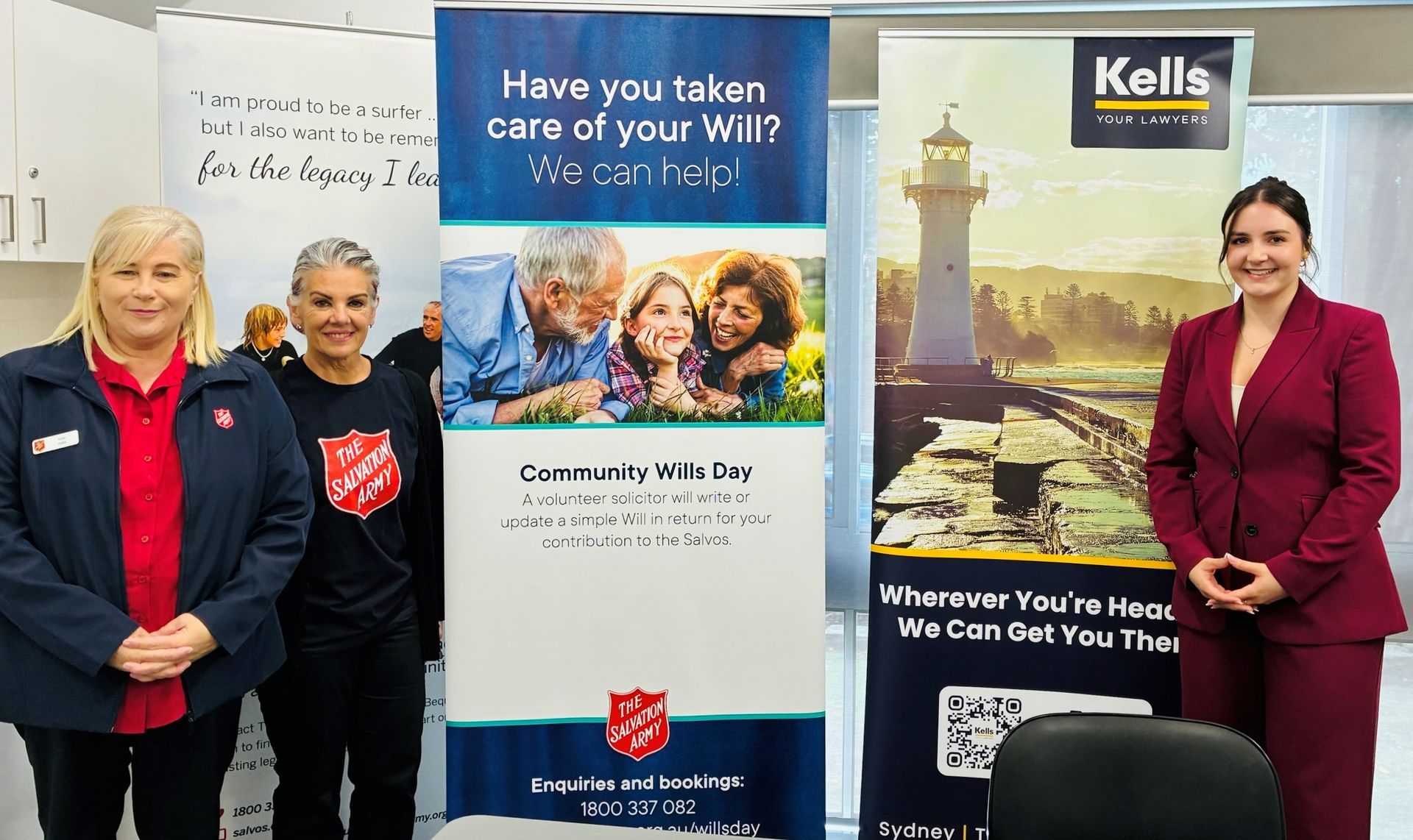
Kells recently took part in the Salvation Army Community Wills Day held at Helensburgh Community Centre, reinforcing the firm’s ongoing commitment to giving back to the communities it serves. As part of the initiative, Estate Planning lawyers Nicki McNamara and Genevieve Van Yzendoorn volunteered their time on the day, working directly with community members to assist with the preparation of Wills and contribute to an initiative focused on practical support and community connection. Community Wills Days, delivered in partnership with The Salvation Army, bring together legal professionals and local organisations to provide accessible estate planning services in a welcoming community setting. Managing Partner Paul Magagnino said initiatives like the Helensburgh Community Wills Day reflect Kells’ broader approach to community involvement. “Giving back is a core part of who we are at Kells. Community events like this allow us to use our skills in a practical way while building meaningful connections with the people and organisations that make our region strong. It was fantastic to see our team involved and to support the important work being done by The Salvation Army.” Kells continues to support communitybased initiatives across the Illawarra and surrounding regions, with a focus on access, connection, and contributing positively to local communities. For more information on Salvation Army Community Wills Days, visit . Kells has grown to become a leading full-service law firm in Sydney and the Illawarra region, working alongside our clients and evolving our services to meet our clients’ changing needs. We have a team of passionate, energetic, and client-focused legal professionals with over 70 staff based across 6 offices in Sydney and throughout the Illawarra. For more information contact Shayne Lopeman Marketing Manager +61 2 4221 9362 slopeman@kells.com.au
Long Service Leave (LSL) has long been one of the most misunderstood areas of employment compliance in New South Wales. With evolving work arrangements, varying employment types, and inconsistent interpretations over the years, many businesses have faced uncertainty, and in some cases, costly disputes, around employee entitlements. That’s now changing. The NSW Government has released updated Long Service Leave guidance in March 2026 , providing much-needed clarity on how LSL should be calculated, applied, and managed across a wide range of employment scenarios. For employers, this marks a significant shift, and an important opportunity to ensure compliance. What’s changed? The updated guidance provides clearer direction on several key areas, including: Accurate LSL calculations Improved guidance on how to calculate entitlements, particularly for employees with irregular hours, bonuses, or varying pay structures. Pro-rata entitlements More detailed explanations around when employees may be entitled to pro-rata LSL, especially in cases of resignation, redundancy, or termination. Casual and part-time employees Clarification on how continuous service is assessed for non-full-time employees, an area that has historically caused confusion. Service continuity and breaks Updated interpretation of what constitutes “continuous service,” including how gaps, stand-downs, or changes in employment status are treated. Record-keeping obligations Reinforced expectations for employers to maintain accurate, detailed records to support compliance. Why this matters for employers These updates are not just administrative, they carry real risk if misunderstood or ignored. Incorrect LSL calculations or misinterpretation of entitlements can lead to: Employee disputes and claims Back payments and penalties Reputational damage Increased scrutiny from regulators With clearer rules now in place, there is less room for ambiguity, meaning businesses are expected to get it right. What you should do next If you employ staff in NSW, now is the time to: Review your current LSL policies and calculations Audit employee records and entitlement tracking Ensure payroll systems align with the updated guidance Seek advice where situations are complex (e.g. long-term casuals, variable hours, or employment breaks) Need help navigating the changes? If you’re unsure how the new guidance affects your business, or you want to review your LSL practices, our highly experienced employment law team can help you navigate the changes and ensure you’re fully compliant. Staying proactive now can help you avoid issues later, and give you confidence that your business is meeting its obligations under the updated LSL framework. Contact our employment law team today for understand how we can help you navigate this new law.
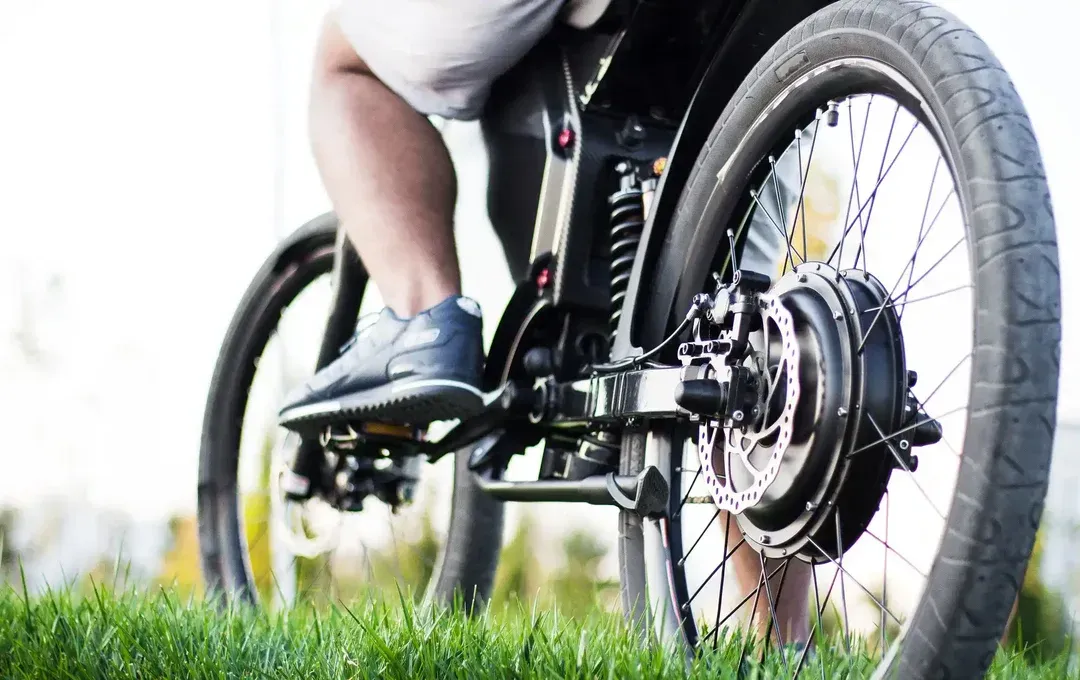
Electric bikes, or e-bikes, have exploded in popularity across New South Wales, offering an affordable, eco-friendly and fun way to get around cities like Sydney, Newcastle and Wollongong. But rising use has also brought safety concerns, legal confusion, and a raft of new laws designed to keep riders and pedestrians safe. What is a legal e-bike in NSW? Under NSW law, an e-bike is treated as a bicycle, but with specific technical standards: The motor must be pedal-assisted only, meaning the motor helps only while you pedal. The motor must cut out when the bike reaches 25 km/h. Maximum continuous motor power is being reduced and aligned with national standards to 250 watts . E-bikes that don’t meet these criteria may not be suitable for riding on roads or shared footpaths. Road rules still apply Even if your e-bike is legal to own and ride, you must still follow normal road and path rules, including: Riders must wear an approved helmet . You must obey all applicable NSW road rules , including those about mobile phones, traffic signals, and riding on paths and shared spaces. Legal e-bikes must essentially behave like bicycles, meaning motor assistance must cut out at 25 km/h and you cannot use throttle-only propulsion above walking speed. Age restrictions under consideration Safety concerns , particularly around injuries to younger riders, mean that NSW is examining minimum age limits for e-bike use which includes possibly setting a minimum age (possibly between 12 and 16) for riding e-bikes. The aim is to curb risky behaviour and reduce serious accidents involving children on high-powered or modified e-bikes. Crackdown on illegal e-bikes One of the biggest legal shifts in 2026 is a crackdown on non-compliant and high-powered e-bikes. These crackdown operations are currently being carried out by NSW Police . What happens if you ride an illegal e-bike? Riding a non-compliant e-bike can attract fines. It as anticipated that consequences may expand with new legislative changes and e-bike riders should keep themselves informed of their rights and obligations under the law. As authorities have emphasised, the crackdown isn’t just punitive, it’s about safety and ensuring e-bikes are a sustainable mode of transport, not a source of harm. Looking ahead Due to increasing popularity and uptake of e-bikes in NSW and the associated dangers of e-bike use, it is anticipated that there are still changes to come in regard to the use of e-bikes. As discussed, this may include minimum age requirements or other methods of keeping track of people who own and operate e-bikes. Whether you’re commuting, exercising or just enjoying a ride through your local neighbourhood, understanding these laws helps you stay safe and legal, and make the most of your e-bike experience. If you’re unsure whether your e-bike meets legal requirements, check the manufacturer’s specifications against the NSW government criteria, and consider professional advice on compliance. If you, or somebody you know, have been injured while riding your electric (or non-electric) bike or scooter, and need help or advice navigating rights and entitlements to compensation, please reach out, we are here to help and are only a phone call or online enquiry away. Our experienced personal injury team offers a FREE, no-obligation consultation to assess whether you may be entitled to make a claim. If you decide to proceed, our services are provided on a no win, no fee basis. Contact us today to discuss your options.